


Living with untreated Borderline Personality Disorder (BPD) in Georgia can be emotionally overwhelming. Individuals often experience intense mood swings, fear of abandonment, and unstable relationships.
These challenges can lead to self-harm, substance abuse, and even suicidal thoughts. In Georgia, many individuals face these struggles without access to proper treatment.
This infographic sheds light on the emotional costs of living with untreated BPD in Georgia, highlighting the importance of seeking help and the impact of the disorder on daily life.
Understanding these effects is the first step toward healing and support.
The Emotional Cost of Untreated BPD in Georgia
Living with untreated BPD in Georgia can lead to significant emotional distress. Individuals may experience intense mood swings, feelings of emptiness, and chronic emotional pain.
These symptoms can result in impulsive behaviors such as self-harm or substance abuse as coping mechanisms.
The lack of effective treatment exacerbates these issues, leading to a cycle of emotional turmoil.
In Georgia, a substantial number of adults who need mental health care do not receive it due to cost, with approximately 45.4% reporting unmet needs.
This financial barrier prevents many from accessing necessary treatments like Dialectical Behavior Therapy (DBT), which has proven effective for managing BPD symptoms.
The emotional toll of untreated BPD extends beyond the individual, affecting families and communities.
Without proper treatment, individuals may struggle to maintain stable relationships and employment, leading to social isolation and decreased quality of life.
Relationship Struggles: The Impact of Untreated BPD
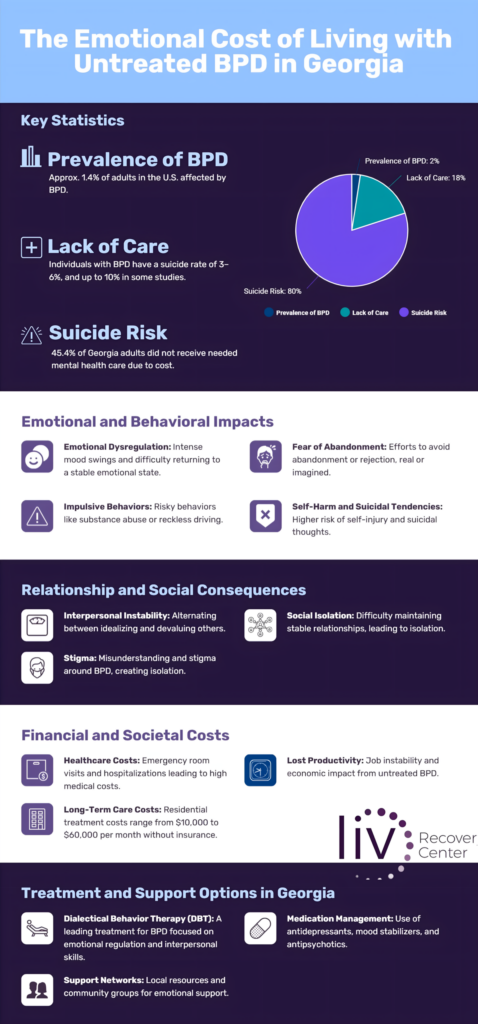
Untreated BPD can severely impact personal relationships, leading to instability and emotional distress. Individuals with BPD often experience intense fear of abandonment, leading to frantic efforts to avoid real or imagined separation.
This fear can manifest as clinginess or, conversely, sudden withdrawal, creating confusion and strain in relationships.
The emotional instability associated with BPD can result in extreme reactions to perceived slights or rejections.
Individuals may experience rapid shifts in mood, idealizing someone one moment and devaluing them the next, a phenomenon known as “splitting“.
These unpredictable behaviors can lead to conflicts, misunderstandings, and emotional exhaustion for both parties involved.
Family members and friends often find themselves in a constant state of alertness, trying to manage the emotional volatility and prevent crises.
This dynamic can lead to burnout and strained relationships, highlighting the importance of seeking professional help to address the underlying issues of BPD.
The Ripple Effect: Broader Implications of Untreated BPD in Georgia
Untreated BPD doesn’t just affect the individual; it sends ripples through families, communities, and the healthcare system.
- Family Dynamics: Family members often become emotional caregivers, navigating the highs and lows of their loved one’s moods. This role can lead to burnout, strained relationships, and a sense of helplessness.
- Community Impact: Communities bear the brunt through increased healthcare utilization. Individuals may frequent emergency rooms or require long-term care, straining local resources and increasing costs.
- Economic Costs: Untreated BPD can lead to job instability, increased disability claims, and higher healthcare expenses. The financial burden extends beyond the individual, affecting employers and taxpayers alike.
In Georgia, where over 50% of adults with mental illness receive no treatment, the ripple effect is profound. Addressing untreated BPD is not just a personal issue. It’s a community concern that requires collective action.
Treatment Options in Georgia: Pathways to Emotional Healing
Despite the challenges, effective treatment options for BPD are available in Georgia.
- Therapeutic Interventions: Dialectical Behavior Therapy (DBT) is a leading treatment for BPD, focusing on emotional regulation, interpersonal effectiveness, and distress tolerance. Studies have shown that DBT can lead to significant improvements in symptoms and quality of life.
- Local Treatment Centers: Facilities like Liv Recovery Center offer specialized programs for BPD, providing comprehensive care tailored to individual needs.
- Support Networks: Support groups and community resources play a crucial role in recovery, offering a sense of belonging and shared understanding.
Accessing treatment can be challenging due to financial constraints and a shortage of specialized providers.
However, community resources and support groups are available to help individuals navigate these barriers. Seeking help is the first step toward managing BPD and improving emotional well-being.
Taking the First Step Toward Healing
Untreated Borderline Personality Disorder (BPD) in Georgia has far-reaching emotional, relational, and societal impacts.
However, with early intervention and appropriate treatment, individuals can manage symptoms and lead fulfilling lives.
If you or someone you know is struggling with BPD, don’t wait. Reach out to mental health professionals, support groups, or community resources today.
Taking that first step can be the beginning of a transformative journey toward emotional well-being.