


Teen mental health is finally getting the attention it deserves. But one group is often left out of the conversation. Teens with traits of Borderline Personality Disorder (BPD).
At LIV Recovery Center, we know these teens aren’t “too much” or “just dramatic.” They’re overwhelmed and need the right kind of support at home, in treatment, and in the classroom. Atlanta schools can play a huge role in helping them feel safe, seen, and successful.
Understanding BPD Traits in Teens
Most teens with BPD traits don’t have a formal diagnosis. And that’s okay. Traits can show up long before anyone puts a name to them. What matters is noticing the signs early and responding with care.
Some common BPD traits in teens include:
- Big emotional reactions that seem to come out of nowhere
- Intense fears of being rejected or abandoned
- A pattern of “all or nothing” thinking, things or people are either amazing or terrible
- Acting impulsively when upset, like yelling, shutting down, or even self-harming
These aren’t signs of bad behavior. They’re signs of emotional pain. With the right tools, teens can learn how to manage these intense feelings and build healthier relationships.
That’s why schools need to understand what they’re seeing and know how to help before things spiral.
At LIV Recovery Center, we help teens learn these tools every day through trauma-informed therapy and emotional regulation skills. And it starts with understanding.
Why Schools Are on the Front Lines
Teachers and counselors are often the first adults to notice the early signs when something feels “off.” They see it in skipped assignments, mood swings, or conflicts with friends. Teens with BPD traits may struggle with feeling misunderstood or unsafe.
That’s why schools in Atlanta need more than academic strategies; they need emotional ones, too.
Emotional dysregulation can impact attendance, learning, and peer relationships. But with a little support, school can also be a stabilizing force.
When students feel emotionally safe at school, they’re more likely to stay engaged. When teachers have the training to handle emotional outbursts calmly, trust grows. When school counselors understand BPD traits, they can respond without shame or blame.
At LIV Recovery Center, we believe healing happens across environments. When teens are supported both at school and in treatment, they’re more likely to succeed in both places.
Schools don’t have to fix everything, but they can be a powerful part of the solution.
Building Trauma-Informed School Environments
Many teens with BPD traits have lived through trauma. It may not be obvious, but it’s there: bullying, unstable family dynamics, neglect, or other painful experiences that shaped how they see the world. That’s why a trauma-informed approach is essential.
In a trauma-informed school, staff are trained to understand that behavior is often communication. Instead of asking, “What’s wrong with this student?” they ask, “What might this student have been through?”
Some trauma-informed practices include:
- Predictable routines that help teens feel safe
- Gentle tone and body language when students are upset
- Offering choices instead of ultimatums to avoid power struggles
- Validating emotions without rushing to fix them
These aren’t big changes, but they have a big impact. They can prevent emotional meltdowns and reduce feelings of shame.
At LIV Recovery Center, we use trauma-informed strategies in all our programs, including for teens navigating school stress.
When schools mirror that same approach, it creates a network of support that can change everything.
School-Based Strategies That Actually Help
Support doesn’t have to be complicated. In fact, simple changes at school can make a huge difference for teens with BPD traits. These students need tools, not punishments. They need adults who respond with calm, not control.
Here are a few strategies Atlanta schools can start using now:
- Emotion regulation groups: Schools can partner with mental health providers to offer small group sessions that teach DBT-inspired skills.
- Check-in systems: A trusted staff member can meet briefly with the student each morning to review their emotional state. This helps catch issues early.
- Restorative responses: Instead of suspensions or detentions, schools can guide students through reflective conversations when conflict happens.
When schools take a proactive approach, students feel supported instead of singled out. These methods also reduce burnout for teachers and create a more peaceful learning environment.
At LIV Recovery Center, our clients learn many of these same tools. When schools use similar approaches, students have a better chance of carrying those skills into daily life. It’s not about fixing the teen. It’s about changing how the system responds.
How Parents and Schools Can Work Together
When teens are struggling, the adults in their lives need to work as a team. That means schools and parents should be in regular communication, not just when there’s a crisis.
Start with a shared goal: helping the teen feel safer, capable, and in control. Then talk through what that looks like at home and at school. For example, if the student is using coping cards during class, make sure parents know and encourage similar tools at home.
A few ways to build that connection:
- Regular, low-stress check-ins between school staff and families
- Shared behavior support plans with realistic goals
- Quick updates when things go well, not just when they go wrong
At LIV Recovery Center, we work closely with families to teach validation, boundaries, and communication skills.
When schools also take that family-centered approach, teens stop feeling caught in the middle. They start feeling like everyone is on their side.
Bridging the Gap Between School and Treatment
Many teens with BPD traits benefit from structured mental health support. But that doesn’t mean they need to miss school. In fact, the right kind of outpatient care can work alongside school, not against it.
Partial Hospitalization Programs (PHP) and Intensive Outpatient Programs (IOP) are built to support both mental health and daily life. At LIV Recovery Center, we offer flexible options, including Evening IOP, so students can continue their education while getting the care they need.
Here’s what that might look like:
- A student attends PHP during the day, then transitions back to school with support
- IOP sessions take place after school, helping the teen manage emotions without falling behind academically
- LIV staff collaborate with school counselors to ensure a smooth, coordinated plan
The goal is to reduce stress, not add to it. By creating space for both learning and healing, schools and treatment centers can work together to help teens build real momentum.
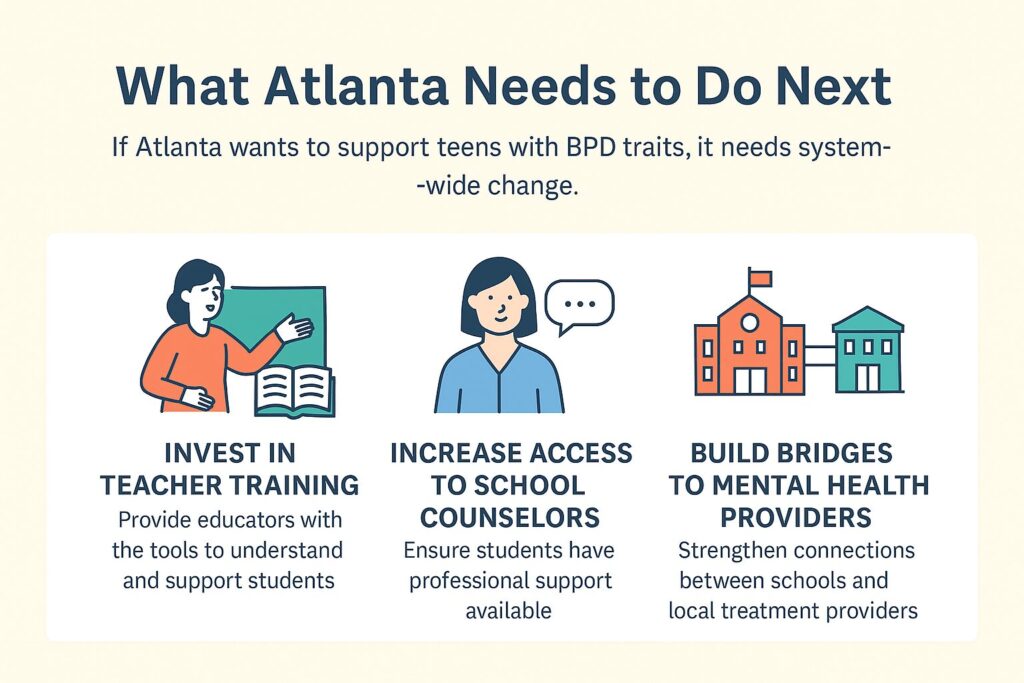
What Atlanta Needs to Do Next
If Atlanta wants to support teens with BPD traits, it needs more than individual efforts. It needs a system-wide change.
That means investing in teacher training, increasing access to school counselors, and building bridges between schools and mental health providers.
Many teens are slipping through the cracks. They act out or shut down, and instead of support, they get detention or suspension. This approach doesn’t work.
These teens aren’t defiant. They’re overwhelmed and doing their best to manage emotions that feel too big to hold. Schools must respond with curiosity, not control.
Policy change can start small. Schools can adopt trauma-informed practices districtwide. They can create clear referral pathways for students in distress.
They can host workshops for parents and staff about emotional dysregulation and mental health support.
And perhaps most importantly, they can build relationships with local treatment providers who specialize in personality disorders and co-occurring conditions.
LIV Recovery Center is already helping teens and families navigate this complex space. When Atlanta schools step into that same mission, teens with BPD traits don’t just survive school; they grow within it.
What We’re Doing at LIV Recovery Center
At LIV Recovery Center, we work with teens and young adults who show signs of emotional dysregulation, intense relationship patterns, and traits linked to Borderline Personality Disorder.
We don’t rush to label. We focus on helping each person understand their emotions, build coping skills, and feel more in control of their lives.
Our outpatient programs are designed to be structured and flexible. That means teens can get help without dropping out of school or stepping away from their goals.
We offer both day and evening options, including PHP and IOP, so students and their families can find a schedule that works.
Everything we do is rooted in trauma-informed care. Many of our clients have experienced situations that left lasting emotional wounds. Instead of focusing only on symptoms, we help them process those experiences and build emotional strength from the inside out.
We also work with families to improve communication and reduce chaos at home. When school, home, and treatment are all aligned, change happens faster. And it lasts longer.
If you’re a parent, educator, or advocate looking for real answers, not blame, our team is here to help.
Empowering Next Steps
Teens with BPD traits aren’t broken. They’re sensitive, strong, and struggling to stay afloat in systems that often don’t understand them. Atlanta schools have a chance to be part of the solution.
At LIV Recovery Center, we believe that early support changes everything. If your teen needs help, or if you’re an educator trying to do more, we’re ready to support you. Contact us today for more information.