
When someone struggles with addiction, the effects often reach the entire family. Daily life may become unpredictable, and each person finds ways to manage the stress. Over time, these coping patterns can develop into recognizable family roles.
These roles may help the household function during difficult moments. However, they can also shape your identity, relationships, and emotional health for years. Understanding your role can help you separate who you are from what you learned to do for survival.
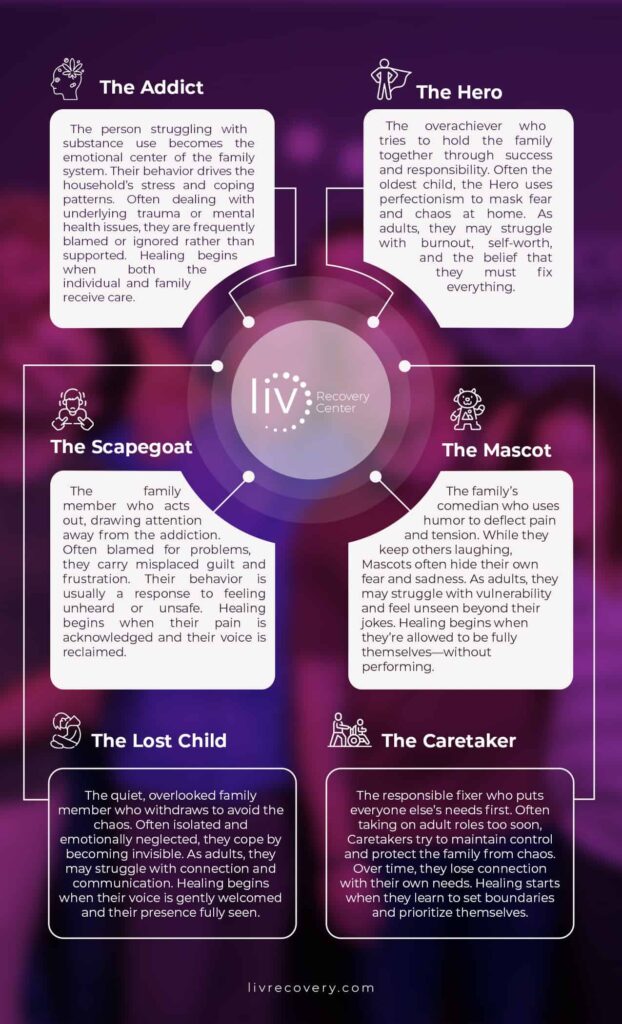
Why Families Develop Roles Around Addiction
Addiction can change communication, responsibilities, and emotional safety within a household. One day may feel calm, while the next brings conflict, withdrawal, or uncertainty. Family members often adjust their behavior to avoid problems, protect others, or keep daily life moving.
A child may become highly responsible because the adults feel unreliable. Another child may act out because anger feels safer than sadness. A spouse may begin managing every crisis and covering the consequences of a loved one’s substance use.
These roles aren’t fixed personality types or formal mental health diagnoses. They’re patterns people may develop in response to ongoing stress. One person can also move between roles depending on their age, relationships, and circumstances.
Family members may follow unspoken rules such as “don’t talk,” “don’t feel,” or “don’t trust.” Problems remain hidden, emotions go unspoken, and everyone learns to walk on eggshells. This silence can leave each person feeling alone, even when the family remains physically close.
SAMHSA explains that family support can play an important role when someone faces mental health or substance use challenges. Its resources for families coping with substance use and mental health concerns also emphasize the value of support and open communication. Families can learn new ways to respond without blaming, controlling, or ignoring the problem.
1. The Person Struggling With Addiction
The person using alcohol or drugs often becomes the center of the family system. Their behavior may affect household routines, finances, relationships, and everyone’s emotional state. Family members may spend much of their time anticipating what this person will do next.
This person may appear angry, distant, unreliable, or emotionally unavailable. However, substance use can exist alongside trauma, depression, anxiety, or other mental health concerns. Shame and fear may also make it difficult to admit there’s a problem or accept help.
Some relatives respond with anger, while others avoid discussing the substance use. Neither reaction addresses the full situation. Effective treatment looks beyond the substance and considers the person’s mental health, experiences, relationships, and recovery needs.
When a mental health condition and substance use disorder occur together, both concerns need coordinated care. LIV Recovery Center’s dual diagnosis treatment program helps you address these connected challenges through one personalized plan. This approach can support greater stability while helping you understand the patterns beneath substance use.
2. The Hero: The Responsible Overachiever
The Hero tries to prove the family is doing well. They may earn strong grades, excel at work, manage household responsibilities, or become highly dependable. Their success gives the family something positive to focus on during difficult periods.
Although Heroes may appear confident, they often carry intense pressure. They may believe their value depends on being productive, responsible, or perfect. Making a mistake can feel dangerous because achievement has become part of how they create safety.
This role often develops in the oldest child, but anyone can become the Hero. They may believe that doing everything correctly will prevent conflict or help the person stop using substances. When that doesn’t happen, the Hero may blame themselves and work even harder.
As adults, Heroes may become perfectionists or overworkers. They often struggle to rest, delegate responsibilities, or ask for support. Even during calm periods, they may feel responsible for keeping everyone else stable.
Healing helps the Hero understand that their worth doesn’t depend on performance. They can practice accepting help, setting realistic expectations, and making space for their own emotions. Responsibility can remain a strength without controlling every part of their life.
3. The Scapegoat: The Person Who Acts Out
The Scapegoat becomes the family member everyone sees as the problem. They may break rules, argue with authority, struggle at school, or express anger openly. Their behavior draws attention away from the addiction and gives the family another crisis to manage.
However, the Scapegoat may be expressing feelings the rest of the family avoids. Anger can communicate fear, hurt, betrayal, or frustration when no one feels safe discussing those emotions directly. Acting out may also become one of the few ways this person receives attention.
Being blamed repeatedly can damage self-worth. The Scapegoat may begin believing they’re difficult, unlovable, or destined to fail. These labels can follow them into friendships, work, and romantic relationships.
As adults, Scapegoats may expect rejection or respond defensively during conflict. They may struggle to trust authority, accept feedback, or believe others will treat them fairly. Some continue creating conflict because chaos feels more familiar than stability.
Healing allows the Scapegoat to express pain without destructive behavior. Therapy can help them challenge harmful labels, regulate strong emotions, and communicate their needs clearly. They deserve to be understood as a whole person, not reduced to a role they learned during family stress.
4. The Lost Child: Quiet and Disconnected
The Lost Child copes by becoming less visible. They avoid conflict, spend time alone, and rarely ask for attention. While other family members manage crises, the Lost Child tries not to create another problem.
This person may escape into books, games, television, music, or daydreaming. Solitude can provide relief from the family’s tension and unpredictability. However, staying quiet can also leave their emotional needs unnoticed.
Lost Children are often described as easy or independent. In reality, they may have learned that expressing needs won’t bring comfort or could add stress to the household. They protect themselves by expecting little from others.
As adults, Lost Children may struggle with closeness and communication. They might avoid conflict, withdraw when emotions become intense, or feel uncomfortable receiving care. Relationships can feel risky because connection once came with uncertainty.
Healing happens through safe and consistent relationships. The Lost Child can learn to identify emotions, voice needs, and remain connected during discomfort. This process should move at a manageable pace, with respect for the coping skills that once helped them feel safe.
5. The Mascot: The Person Who Uses Humor
The Mascot uses humor to lower tension within the household. They tell jokes, entertain others, and try to make difficult situations feel lighter. Laughter can offer the family a brief break from fear, conflict, or sadness.
Behind the humor, the Mascot may feel anxious or emotionally overwhelmed. Making others laugh becomes a way to redirect attention before serious feelings surface. They may worry that sadness, anger, or vulnerability will make the situation worse.
The youngest child often takes this role, although age doesn’t determine it. Anyone who receives approval for being entertaining may learn to hide behind that identity. Eventually, humor can become a barrier that keeps others from seeing their pain.
As adults, Mascots may struggle with serious conversations or emotional intimacy. They may joke when they feel uncomfortable or worry that others won’t accept them without their cheerful personality. Constantly performing can leave them feeling unseen and exhausted.
Healing gives the Mascot permission to experience every emotion. They can remain funny and joyful while learning when humor protects them from honesty. Safe relationships can show them that they don’t need to entertain others to earn care and connection.
6. The Caretaker: The Person Who Fixes Everything
The Caretaker tries to hold the family together. They may clean up problems, make excuses, manage appointments, or take over responsibilities neglected by the person using substances. Their help often keeps the household functioning during unstable periods.
Although Caretakers seem capable and selfless, they may feel anxious, resentful, or exhausted. They often believe that everything will fall apart if they stop managing it. This fear can make it difficult to recognize their own limits.
Caretakers may confuse helping with taking responsibility for another person’s choices. They might cover consequences, provide money, or repeatedly rescue their loved one from difficult situations. These actions come from care, but they may unintentionally support unhealthy patterns.
Over time, the Caretaker can lose touch with personal needs and goals. They may feel guilty when resting, setting boundaries, or saying no. Their identity becomes tied to being needed by others.
LIV Recovery Center’s family addiction care and support helps loved ones understand boundaries, communication, and the difference between support and enabling. Family members also need space to address their own stress and emotional health. Caring for yourself doesn’t mean abandoning someone you love.
Can You Have More Than One Family Role?
You may recognize yourself in several roles. Family dynamics change over time, and people often adapt as new challenges arise. A child may act as the Hero at school, become the Caretaker at home, and use humor around friends.
Your role may also shift when a sibling moves away or another adult becomes unavailable. The family system adjusts, and someone else may take over abandoned responsibilities. That flexibility shows why these roles shouldn’t become permanent labels.
The goal isn’t to place every family member into one category. Instead, these roles offer a framework for understanding learned behaviors. Recognizing a pattern can help you decide which parts still serve you and which parts need to change.
How These Roles Can Continue Into Adulthood
A family role may continue long after the substance use ends or the person leaves home. You might repeat familiar behaviors in friendships, romantic relationships, or the workplace. These reactions can feel automatic because they once helped you navigate uncertainty.
The Hero may take on every project and fear disappointing coworkers. The Scapegoat may expect blame, while the Lost Child avoids asking for help. The Mascot may hide sadness, and the Caretaker may choose relationships where they feel responsible for fixing someone.
These patterns don’t mean you’re broken. They show how effectively you adapted to a difficult environment. However, coping skills created for survival may limit your ability to feel safe, connected, and fulfilled today.
Therapy can help you notice what happens before an old pattern takes over. You can learn to pause, identify your needs, and choose a different response. Change becomes easier when you understand why the behavior developed.
How Families Can Begin Changing the System
Family healing doesn’t depend on one perfect conversation. It develops through repeated choices that create honesty, consistency, and respect. Each family member can take responsibility for their own behavior without accepting blame for another person’s addiction.
Healthy change may include setting clear boundaries, speaking honestly, and following through on decisions. It can also mean allowing natural consequences instead of immediately fixing every problem. These steps may feel uncomfortable because they challenge long-standing patterns.
Family support can also improve communication and reduce isolation. Loved ones can learn about addiction, mental health, trauma, and recovery. This knowledge helps families respond with compassion while maintaining healthy limits.
Not every relationship will heal in the same way. Some families rebuild trust together, while others need greater distance and stronger boundaries. Your care plan should respect your safety, circumstances, and recovery goals.
You’re More Than the Role You Learned
You didn’t consciously choose a role in the addicted family system. You adapted to an environment that required you to find a way through stress and uncertainty. That role may explain some of your patterns, but it doesn’t define your identity.
You can keep the strengths you developed while releasing the pressure attached to them. The Hero can remain motivated without chasing perfection. The Caretaker can remain compassionate without carrying everyone else’s responsibilities.
Healing gives you room to speak honestly, build boundaries, and create healthier connections. At LIV Recovery Center, we help individuals and families understand the patterns surrounding addiction and mental health. Together, you can begin building relationships based on trust, support, and shared responsibility.